
 On June 5th we received the response to a Public Records Request from the Governor’s Office regarding the March 3 “town hall” meeting held at the Aurora State Airport that was organized by Beth Wytoski of Regional Solutions. If you don’t know, Regional Solutions is the community and economic development arm in the Governor’s office to “advance projects, solve problems, seize opportunities and respond to emerging local needs.”
But no “towns” were invited to this town hall.
Reminder to the Governor’s Office: there are two cities in close proximity to the Aurora State Airport that bear the vast majority of the airport impacts: Wilsonville and Aurora.
In the March Regional Solutions Exchange newsletter, the meeting was described by Beth Wytoski as follows:
I convened a town hall with several property owners and business operators at the Aurora airport for a question and answer session with the Oregon Department of Aviation (ODAV) including agency director Kenji Sugahara and State Airports Manager Tony Beach. ODAV is completing a major master planning process for the Aurora airport and there have been questions about some key components including lengthening the runway, protecting economic activity in the region, timelines, and expansion opportunities. The conversation was candid and clarified some of the details around:
- The internal circulation road—which includes limited signage changes and relocation of a gate as well as clarification about use of taxiways as roadways
- The runway extension—which is required by the FAA for safety and aviation noise abatement, is a significant topic of conversation. This topic area is complicated by current non-standard conditions. Aviation will work with the FAA to define the path to meeting standards, including applying for variances of ‘Modifications of Standards for the Runway Object Free Area.
- Questions remain about the legal and financial liability of some potential components including the relocation of Highway 551.
- Property Acquisition, such as the Wylee/Bennet area, were discussed in terms of priority areas needed in order to address non-standard conditions and reserve areas which would be acquired from willing sellers in order to keep them in aeronautical use.
Note that some of the subjects were safety-related, including an internal circulation road (to keep vehicles off the runway and taxiways and thus away from aircraft) and a runway extension to meet the runway length standards for the larger mid and full-sized corporate jets using the airport.
Unless you had been a member of the PAC during the current master planning process you wouldn’t be aware that when the alternatives were developed early on they included an internal circulation road (technically called a vehicle service road or VSR), but it was eliminated after private property owners within the airport raised a hue and cry about having property condemned for that purpose. Meanwhile, Aurora State Airport is second in the nation after O’Hare Airport for Vehicle/Pedestrian Deviations (unauthorized vehicles or pedestrians entering the runway)!
So, yes. There are definitely safety issues because among other things more and more bigger jets are using Aurora but the airfield design is the same as it was fifteen years ago – designed for smaller, B-II sized General Aviation aircraft.
Runway length is an issue simply because larger mid-sized corporate jets, and especially the largest corporate jets require a longer runway for takeoff with a maximum load. Often the bigger jets have to depart with a lighter load or less fuel because of the runway.
All of which makes the fact that one of the two pages of notes on the meeting taken by Beth Wytoski are about safety.
But not the safety you might think:
- FAA denied modification of standard; Aviation had to show path to conformity to standard but Aviation will submit application for modification, but FAA has consistently said the airport had to meet standard and work toward correction. Aviation will ask for additional modification to standards. FAA said they had to have a plan to meet standard in order to request a modification from standard.
- Standards or approved modifications must be in place to qualify for FAA funding
- Extension is estimated to cost roughly $50M, so significant cost, but could happen with non-FAA dollars
- Contact congressional offices re: modification
- Runway extension is singularly the most critical safety issue
Here we have the representative of the Governor’s business development group colluding with the Dept. of Aviation and the business interests at the airport to demand Modifications of Standards (an FAA term equivalent to a variance in land use) to evade compliance with safety requirements that the FAA has required in the master plan.
Notice the focus is on lengthening the runway, but then avoiding safety requirements like the vehicle service road, moving the taxiway to the east because of the wider wingspan of the bigger jets, relocating Hwy 551 because it’s too close to the runway, etc.
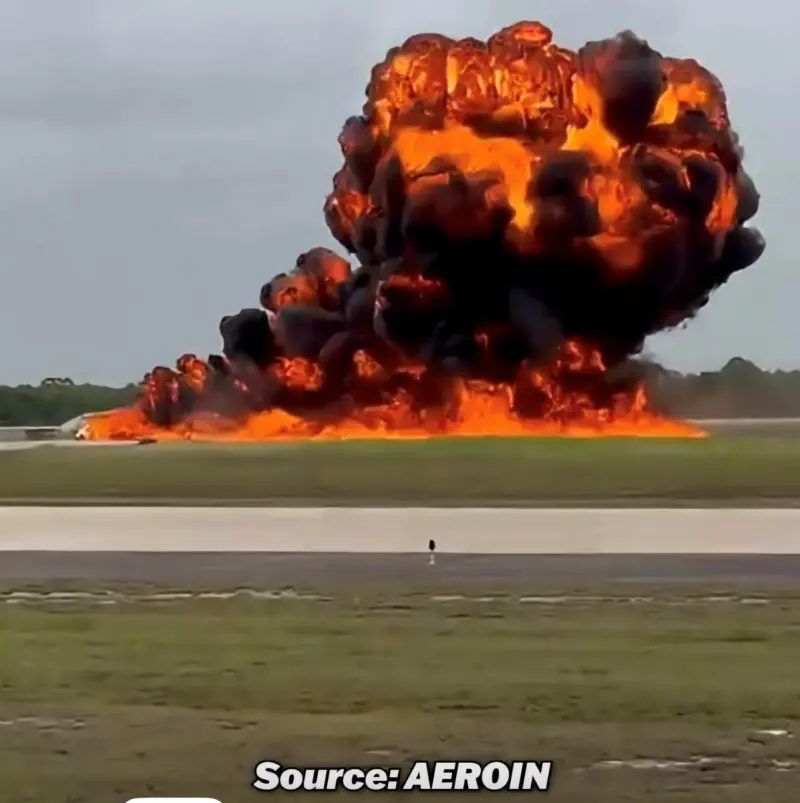
This matters for two reasons. First, one has to ask “why is the Governor’s office working with ODAV and the business interests at Aurora to circumvent FAA safety regulations?” Second, there was a horrible corporate jet crash on June 7 in the Dominican Republic with two fatalities. It was a Gulfstream 200, typical of the mid-sized corporate jets that use Aurora.
You can watch an early YouTube report on the crash below.
It is said that few things focus the mind like a tragedy.
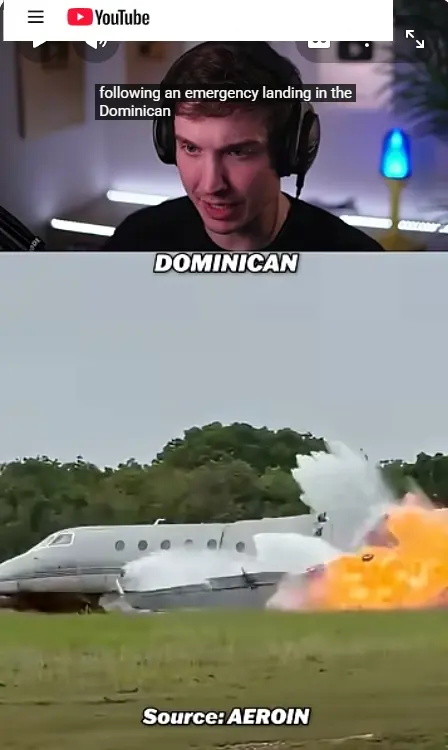
The aircraft suffered some type of problem on takeoff, circled multiple times to dump fuel, landed on the runway as it came back in, and then something went terribly wrong and it departed the runway to the left veering into the grass of the Runway Safety Area before breaking up and erupting in a ball of burning jet fuel.
What would have happened if this had occurred at Aurora?
Who knows! The Aurora Fire District sold its foam fire suppression truck last year, and you can’t put out a jet fuel fire with water. The water fire suppression system appears to be inadequate and is only infrequently tested for total capacity and pressure to supply the fire hydrants.
This Gulfstream veered off the runway at La Romana Airport, which has about 450 feet of clear area on either side of the runway, so this plane crash did not endanger other people or property. Aurora has only 300 feet of clear area between the runway and the highway, which is why the FAA requires the highway to be moved. On the opposite side, the taxiway is a mere 200 feet from the runway, so a crash like this could easily involve hangars and harm other aircraft and people.
It the case of Aurora it could have gone through the fence and onto Hwy 551 before it erupted into flames.
This crash, which happened during a landing, begs another question: what would happen if a jet crashed during takeoff? The immediate flight path is over Charbonneau and south Wilsonville. The result would be a catastrophe of epic proportions.
All of which brings to mind again the Introduction to the Landside Evaluation section of the current master plan which says this:
Aurora State Airport is located on a constrained site and as such, it may not be possible to fully address every facility requirement. The focus of the landside evaluation is to identify the most efficient use of limited space, with aeronautical uses (aircraft storage) considered the highest and best use.
That’s right. The aviation engineering firm that prepared the master plan identified Aurora as a “constrained site” and observed that the principal focus of their work is on aircraft storage instead of creating clear areas in compliance with FAA safety regulations.
As the most famous line from the movie Jerry McGuire said, “Follow the money.”
Expanding and operating the Aurora State Airport is all about the money for the developers, the operators on the airport, the wealthy few that own the corporate jets, and ODAV who rents hangars and collects a tax on fuel sales..